1 min read
Voice Lessons as Emotional Coaching for Houston Teens
Finding Their Voice in a Noisy World Teen life in Houston can feel loud in every way. There is social media, schoolwork, college prep, sports,...
4 min read
Music Academy of Texas : August 31, 2026
ABRSM music exams can be a clear next step for a student who is ready for a new challenge. They give structure, goals, and a sense of direction that regular practice alone sometimes cannot provide. For many families, they feel a bit like moving up to the next level in school, but for music. That is why they fit so naturally with the back-to-school season in Houston and Katy.
As kids pack backpacks and adults reset their calendars, it is a great time to set fresh music goals too. Some students may be starting lessons for the first time, while others are returning after a summer break. At our school, we use ABRSM as a gentle guide, not a source of pressure. We focus on confidence, steady progress, and helping each student feel proud of how far they have come.
ABRSM stands for Associated Board of the Royal Schools of Music. It is an international system for testing music skills in a clear, step-by-step way. Unlike a casual performance or a school concert, an ABRSM exam is a formal assessment with a trained examiner who listens, scores, and gives written feedback.
ABRSM uses graded levels so students always know where they are and where they are heading. These include:
Early levels that build basic reading, rhythm, and listening
Mid-level grades that stretch technique, expression, and style
Higher grades that prepare students for advanced ensembles and serious study
There are also theory exams that support reading music, understanding rhythms, and knowing how music is put together. This structure can help students who like having a clear plan and milestones to reach.
At the same time, ABRSM is always optional. Many students are happy and successful without exams. But for some, ABRSM goals can:
Add motivation when practice starts to feel routine
Provide a clear timeline and next step to work toward
Offer a feeling of achievement when a grade is passed
The key is matching the exam level to the student’s age, personality, and experience, so it feels exciting, not overwhelming.
Families in the Houston and Katy area know that school expectations can vary from district to district. One benefit of ABRSM is that its standards stay the same no matter where you live. A Grade 3 exam here means the same thing as a Grade 3 exam in another city or even another country.
That consistency brings a few helpful perks:
A portable credential if your family moves to another district or state
A shared language for private teachers, choir directors, and ensemble leaders
A clear record of progress that can support auditions and applications
For students who hope to join competitive school ensembles, youth orchestras, or audition-based choirs, ABRSM can help them feel more prepared. The skills tested in ABRSM exams, like sight-reading and aural work, often line up with what directors listen for in auditions. Exam results and examiner comments can also be useful for building a resume or activity list for college and scholarship applications.
Many Houston-area parents worry about time, stress, and how it all fits into their child’s schedule. That is why we focus on:
Setting realistic exam dates that do not clash with big school events
Choosing grades that match the student’s current level, not just their age
Creating simple practice plans that fit around sports, homework, and family time
We want ABRSM to support life, not take it over.
ABRSM exams are designed to cover the main skills a real musician needs. In a typical practical exam, students do four main things:
Pieces: Perform a few short pieces from a set list, showing style and expression
Scales and arpeggios: Play patterns that build technique and finger strength
Sight-reading: Read and play a short piece they have never seen before
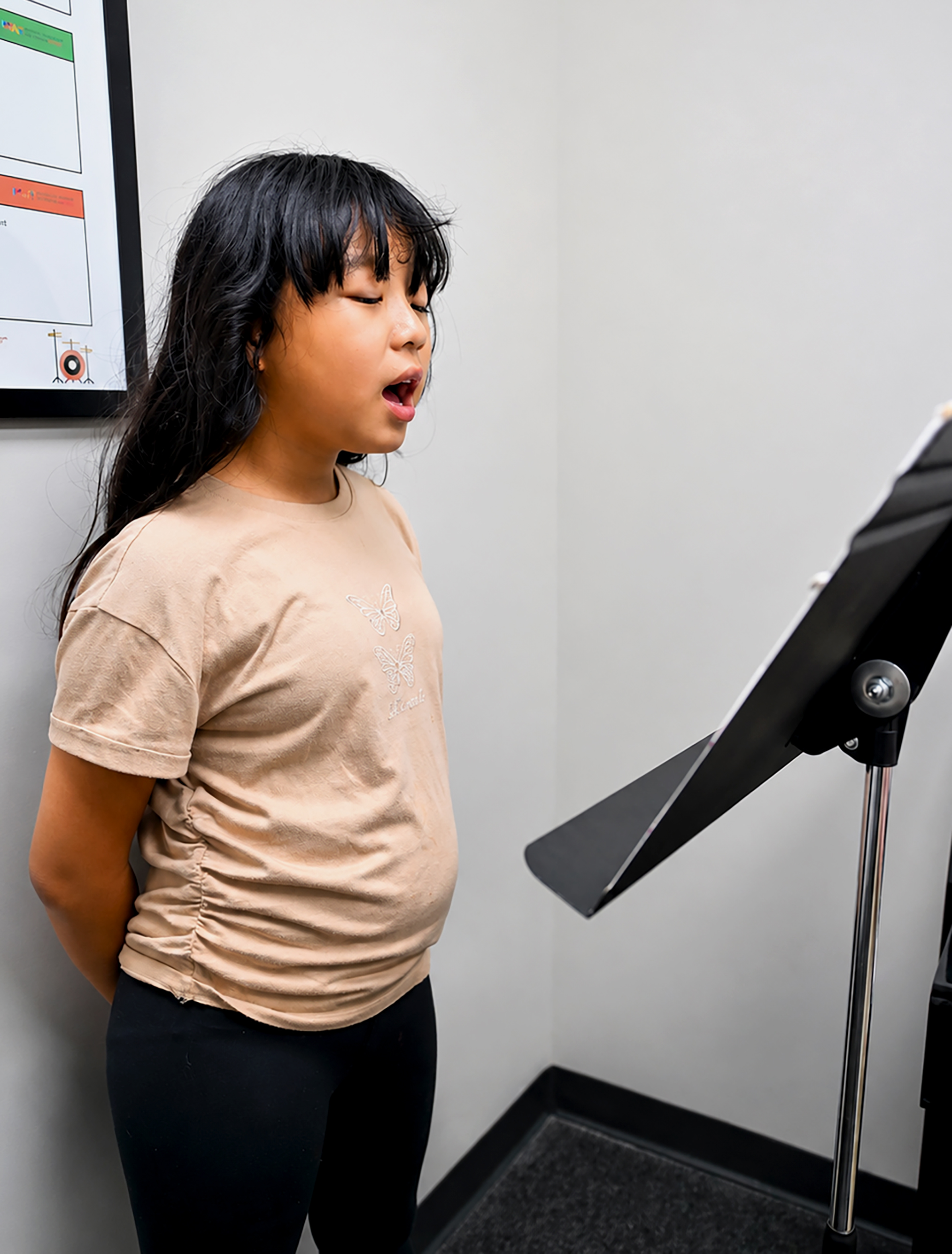
Aural tests: Listen and respond to simple music questions with clapping or singing
At a beginner level, pieces are shorter and slower. The examiner might ask for easy scales and simple clapping or singing tasks. At an intermediate level, students play longer, more expressive pieces, more scales and arpeggios, and harder sight-reading with trickier rhythms.
The exam itself is usually quiet, focused, and surprisingly friendly. Examiners are trained to be professional and kind. After the exam, families receive a report that shows:
Scores for each section
Helpful comments about strengths
Suggestions for what to improve next
Teachers at our academy use those reports as a roadmap for future lessons, so every exam, pass or not, turns into a learning tool.
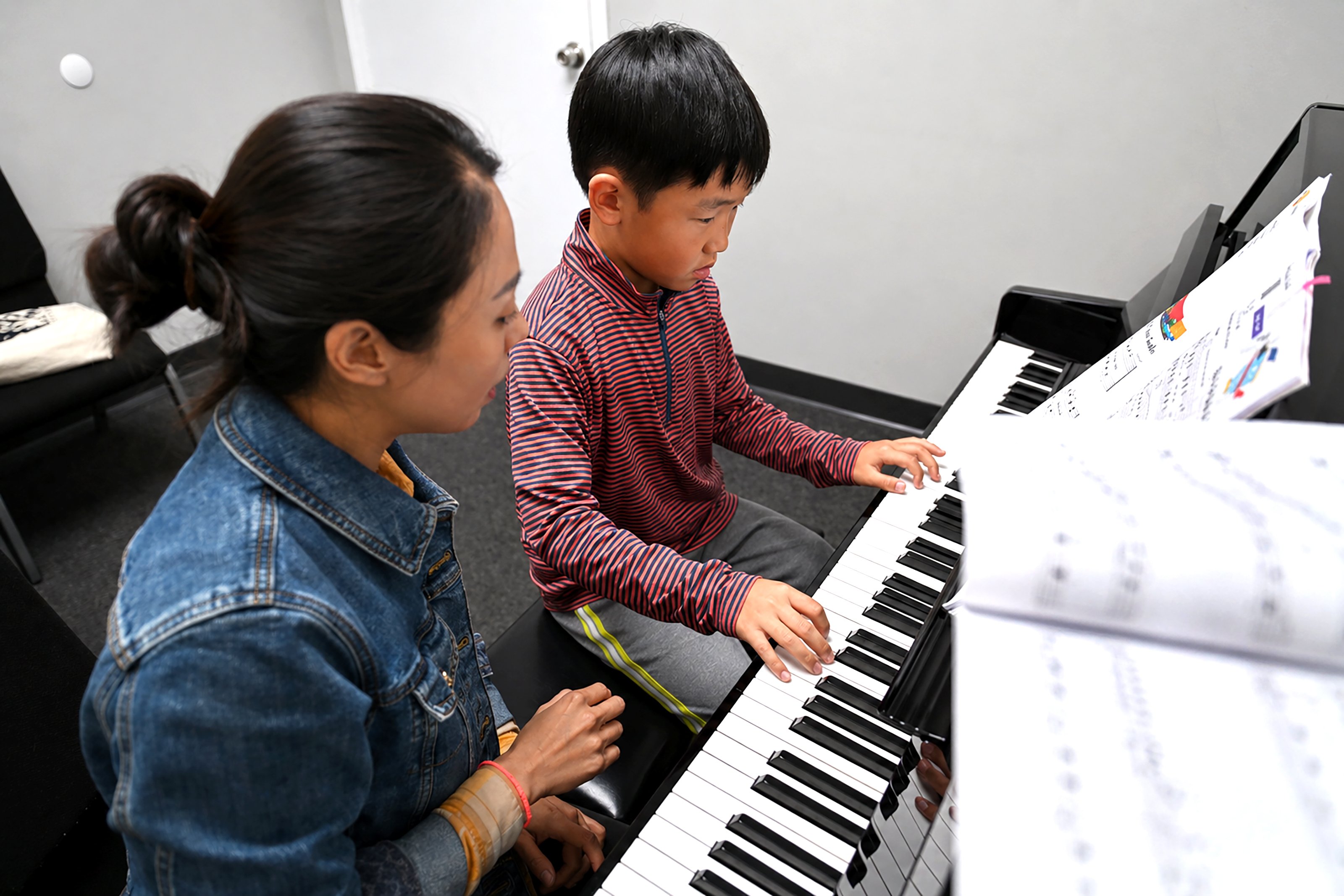
In our lessons, everything starts with the individual student. We teach piano, voice, guitar, strings, drums, and more, all in one-on-one sessions. That format lets us shape each lesson around personal goals, whether that includes ABRSM exams or simply learning favorite songs.
For students who choose to pursue ABRSM, we use a clear step-by-step approach:
Repertoire selection that fits both the student’s level and taste
Simple, written goals so everyone understands the plan
Gentle mock exams in lessons so the real exam feels familiar
Performance opportunities at our Katy and Cy-Fair locations to gain confidence on stage
Our culture is about encouragement, not perfection. We celebrate small wins: a clean scale, a braver dynamic, a smoother phrase. We stay in close touch with parents, sharing what we are working on and how they can support practice at home in a calm, realistic way. Some students choose exams, others focus on creativity and fun, and both paths are respected and supported.
Back-to-school season is a smart time to think ahead about ABRSM. If a student starts lessons or returns in late August, a simple plan might look like this:
First month: Talk with the teacher about goals and whether ABRSM is a good match
Early on: Choose a grade level that feels challenging but not scary
Following months: Learn pieces, work on scales, and slowly add sight-reading and aural
Practice does not have to be long to be effective. Many families find that short, focused sessions fit best with homework and activities. For example:
Ten to twenty minutes a day on school nights, with a bit more time on weekends
Rotating focus between pieces, scales, and sight-reading so practice stays interesting
Using holiday breaks for gentle review rather than cramming
The goal is steady, relaxed progress. When ABRSM is used this way, it can turn the school year into a clear, rewarding musical chapter, giving students in Houston and Katy something meaningful to work toward and something real to celebrate when they reach it.
If your child is ready to turn consistent practice into real progress, we can guide them every step of the way through the music ABRSM exam process. At Music Academy of Texas, we focus on building both strong musical skills and test-day confidence so students feel fully prepared. Reach out to contact us and schedule a time to talk about the right level, timeline, and support for your child’s next exam.
1 min read
Finding Their Voice in a Noisy World Teen life in Houston can feel loud in every way. There is social media, schoolwork, college prep, sports,...
1 min read
Have you been looking forward to learning about drums but don't know who to ask the question, "how long does it take to learn drums?" Drums are,...
1 min read
Beyond School Band: Understanding Private Music Lessons in Katy Many Katy families have kids who love band or choir at school but come home with...